
IslamiCity
Listen PodCasts, Live Quran, Watch Videos @VideoHub

In the 1980s, Malaysian Islamic scholar Mohd Kamal Hassan was commissioned by Malaysia's Prime Minister to draft a concept paper for establishing the International Islamic University Malaysia (IIUM).
Known for his balanced and comprehensive grasp of Islam, Kamal Hassan conceptualized IIUM with a robust philosophical, epistemological, and ideological foundation. His vision framed Islam as a holistic way of life, shaping the university's mission to promote peace and harmony within the Muslim community and beyond.
Deeply involved in IIUM's development until his passing in 2023, Hassan emphasized the importance of spiritual and moral foundations in education, viewing them as essential alongside academic growth.
His collaboration with AbdulHamid AbuSulayman, IIUM's second rector, further cemented the university's distinctive position in global Islamic higher education. Hassan's holistic approach to education and spirituality continues to influence IIUM's identity and legacy.
Professor Emeritus Tan Sri Dr. Mohd Kamal Hassan was born in 1942 in Pasir Mas, Kelantan, Malaysia. He pursued early education locally, earned a B.A. (Hons) in Islamic Studies from Universiti Malaya, and completed advanced degrees (M.A., M.Phil., Ph.D.) at Columbia University, focusing on Contemporary Islamic Thought in Southeast Asia.
Kamal began his academic career at Universiti Malaya and Columbia University before joining the National University of Malaysia (UKM) in 1976. He was instrumental in IIUM's founding, serving in key roles including Professor, Founding Dean of the Kulliyyah of Islamic Revealed Knowledge, and Rector from 1999 to 2006.
His distinguished career was recognized with numerous accolades, such as "Profesor Ulung" (Distinguished Professor) in 2010 and "Tokoh Anugerah Akademik Negara" (National Academic Figure) in 2017. Even after retiring in 2017, Kamal continued to serve as a volunteer consultant and honorary advisor. His research spanned Islamic philosophy, ethics, spirituality, and education. Revered for his humility and dedication, he left a profound impact on academia and spirituality worldwide.
Kamal Hassan's vision for IIUM marked a unique milestone in Islamic higher education. Unlike institutions tied to particular sectarian or secular frameworks, such as Aligarh Muslim University, Darul Uloom Deoband, or Al-Azhar University, IIUM was designed to embody a universal Islamic worldview. It deliberately avoided aligning with any single sect (Salafi, Shia, Liberal, Secular) and maintained independence as a global Islamic institution.
IIUM addresses the educational and intellectual needs of the Muslim Ummah and humanity, offering inclusive, practical solutions to contemporary challenges. It integrates diverse Islamic thought dimensions without adhering to one interpretation. Kamal's vision resulted in a university that is both academically rigorous and spiritually grounded, prioritizing intellectual and moral development.
IIUM was officially established on May 20, 1983, by the decree of the Yang di Pertuan Agong, Sultan Haji Ahmad Shah. Kamal Hassan played a pivotal role from the outset, preparing the working paper that outlined the university's vision, which the then-Malaysian Prime Minister Dr. Mahathir Mohamad approved. Hassan's goal was to integrate all academic disciplines with Quranic and Sunnah values.
His leadership began in 1982, with IIUM founded upon Islamic philosophical and ideological principles. Kamal envisioned IIUM as more than an educational institution-it was a center for intellectual and moral development based on Islamic values.
By 2002-2003, IIUM expanded from two campuses to four, located in Kuala Lumpur, Kuantan, and Damansara Heights. Hassan emphasized unity within the university community, highlighting the collective responsibility to realize IIUM's mission. The university aimed to reorient the Muslim Ummah and mankind through education that combined academic excellence with moral and spiritual growth.
Kamal repeatedly stressed the necessity of an Islamic worldview in education, essential for nurturing intellectuals capable of leading professionally and socio-politically. He ensured the curriculum reflected this vision, integrating both Islamic and Western perspectives across disciplines. IIUM's success, he argued, depended on the commitment of students, faculty, and administrators to uphold its philosophical foundation.
The 1977 World Conference on Muslim Education in Makkah influenced IIUM's establishment, calling for educational systems grounded in an Islamic worldview and knowledge Islamization. Kamal Hassan maintained that Muslim societies' dependence on Western education models necessitated institutions like IIUM to reclaim Islamic intellectual and cultural heritage.
He also advocated for education that fosters both academic and spiritual growth, asserting that students must develop morally and spiritually, not just intellectually. IIUM's curriculum promotes a comprehensive understanding of God, humanity, and the natural world through Islamic teachings.
Unlike other universities that separate religious and secular knowledge, IIUM treats all sciences as Islamic sciences. Every program is rooted in the Islamic philosophy of knowledge. Graduates are expected to be professionally skilled, spiritually strong, morally upright, and contributors to the development of the Muslim Ummah and the wider world.
Kamal Hassan's vision emphasizes integrating spiritual and moral development with academic and professional education. Unlike modern secular universities focusing solely on professional skills, IIUM fosters intellectual growth alongside spiritual and moral excellence.
Programs such as Halaqah (study circles) and Ibadah Camps (spiritual retreats) are core extracurricular activities aimed at strengthening students' spiritual and moral dimensions. The holistic educational philosophy stresses the unity of knowledge under Islamic principles based on Tawhid (the oneness of God).
He argued that external development-science, technology, economic growth-is insufficient without corresponding internal spiritual and moral growth. Education should nurture spiritually and morally upright individuals, essential for societal progress.
For Kamal Hassan, education's goal transcends economic success; it nurtures individuals tasked by Allah SWT to build a universal civilization embodying truth, justice, knowledge, and spirituality. He advocated for education fostering moral and spiritual excellence as prerequisites for national and civilizational development.
IIUM's autonomy allowed it to maintain focus on Islamic core values, free from political or secular interference. Rooted in Quran and Sunnah, IIUM emphasizes authentic Islamic teachings, aiming to produce graduates reflecting balanced, ethical worldviews able to contribute locally and globally.
Ultimately, IIUM graduates are envisioned as well-rounded individuals embodying Islamic values professionally and personally-agents of positive change promoting peace, harmony, and responsible professionalism.
Kamal Hassan viewed spirituality as the essential foundation for resolving global crises. Economic, social, technological, or environmental improvements alone are insufficient. True resolution requires transformation rooted in spirituality-recognition of and submission to Allah SWT, the Creator.
Spirituality involves understanding the metaphysical nature of existence and recognizing Allah's presence in the human psyche and universe. Grounded in Islamic Revealed Knowledge (IRK), or True, Authentic, Universal Knowledge (TAUK), spirituality manifests in behaviours aligned with Allah's guidance, aimed at seeking His pleasure.
Spirituality extends beyond human-God relations to human-human and human-nature interactions, emphasizing justice, compassion, truth, and righteousness. It shapes a life of virtue and good deeds, with a focus on both this world and the hereafter.
Kamal Hassan stressed education's role in cultivating spiritual consciousness. Beyond intellectual growth, education must develop students' moral and spiritual well-being-qualities like repentance, sincerity, contentment, and remembrance of death. IIUM, described as a "Garden of Knowledge and Virtues," prioritizes spirituality and moral excellence within its curriculum.
He called on the Muslim community to fulfill their Qur'anic duty to enjoin good and forbid evil, warning that the loss of spirituality underpins societal crises-moral decay, intellectual arrogance, and materialism. Without spirituality, social, economic, and environmental problems persist.
Hassan urged Muslim leaders and intellectuals to prioritize spirituality in policies and development, believing spiritual foundations foster sustainable development and virtues.
Critiquing the secular paradigm's materialistic and morally indifferent development model, he called for a paradigm shift that integrates spirituality at development's core, resulting in balanced, just, peaceful growth aligned with divine guidance.
Kamal Hassan's vision underscores spirituality's central role in individual and societal well- being. His contributions to IIUM's philosophy and curriculum reflect his commitment to embedding spirituality and moral excellence in education. He believed global crises stem from spiritual voids and called for education to restore spirituality's rightful place.
His teachings encourage educators, leaders, and the Muslim community to cultivate authentic spirituality, shaping character and societal development. Through this, he aspired to a world aligned with truth, justice, and virtue, consistent with Islamic teachings.
In honour of Kamal Hassan's invaluable contributions to IIUM, his dedication to the Islamization of knowledge, and his promotion of Islamic thought globally, this brief tribute recognizes his remarkable academic and spiritual legacy spanning over four decades.
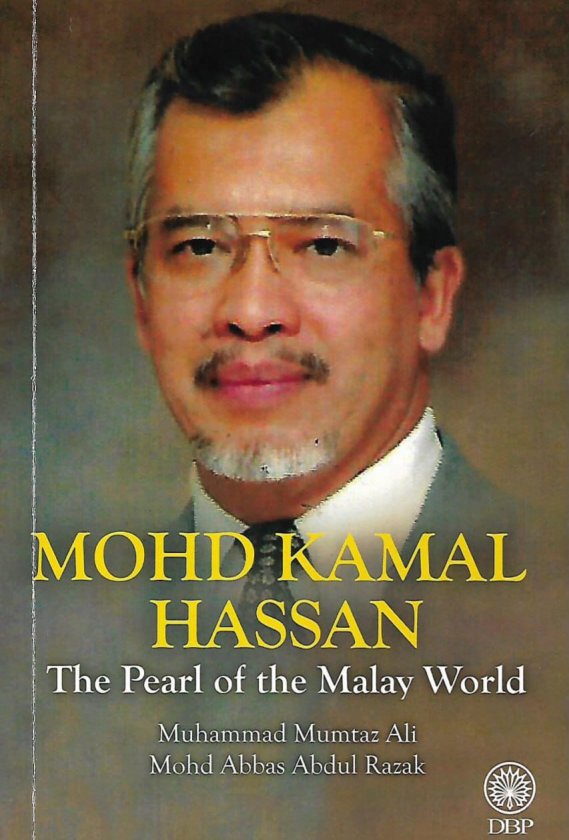
O Kamal Hassan!You are ......
A pearl from the depth of the ocean of knowledge.
A beacon of light that brightens the corridors of knowledge.
A towering personality that mesmerized students and academics alike.
An unapologetic scholar who spoke his mind in defence of Islam and its heritage.
A visionary leader in academia who paved the path for the next echelon of Muslim intelligentsia to come.
A man who was persistent and consistent in the course of Islamization of knowledge, right from its inception to the very last day of his life.
A scholar who did not use militancy in getting across his ideas but used persuasion and convincing arguments.
A classic personification of a humble scholar in Islam.
As your mortal body is enshrined in the belly of the earth, your spirit and knowledge will illuminate a large section of the Muslim Ummah.
Prof. Mohd Mumtaz Ali is a faculty member at the Department of Usuluddin and Comparative Religion, while Dr. Mohd Abbas Abdul Razak is an academic staff member in the Department of Fundamental & Inter-Disciplinary Studies. Both authors are affiliated with AHAS KIRKHS, at the International Islamic University Malaysia.
 Faith in Action: Educating for Peace, Justice, and Human Dignity


