
IslamiCity
Listen PodCasts, Live Quran, Watch Videos @VideoHub

Islam is the last of the Abrahamic faiths, preached by Prophet Muhammad ﷺ, who was born in 570 CE in Mecca and passed away in Medina in 632 CE.
The Qur'an is the book of divine guidance, correcting and completing the earlier testaments of the Torah and the Bible. Its major themes revolve around three central concepts: the absolute unity of God, the role of God's prophets and messengers, and human resurrection with accountability in the Hereafter.
God is the transcendent reality, uniquely one, the creator and controller of everything that exists. It is God who created all that exists-the universe or universes (as there are other universes beyond ours)-and everything within them. What secularists refer to as "nature" is also God's creation, existing and continuing according to His commandments.
To become a Muslim, one simply recites the Shahada, or "Witnessing." The Shahada declares belief in the unseen God and acknowledges Muhammad as His messenger. According to the Qur'an, all of God's prophets and messengers brought the same message of obedience and submission to one God. While Jews were once considered the "chosen people," it is repeatedly stated that Jesus is neither God nor the son of God.
Humans are honored and dignified above all of God's creation: "We have honored the sons of Adam; provided them with transportation on land and sea; given them for sustenance things good and pure; and conferred on them special favors, above a great part of Our creation" (Al-Isra 17:70).
Muhammad was instructed to constantly remind humans of God, the source of all their development, and the faculties He bestowed upon them. Yet, many remain ungrateful, misusing these faculties for wrongful purposes: "Say: It is He who has created you and made you grow, and made for you the faculties of hearing, seeing, feeling, and understanding. Little thanks do you give" (67:23).
Another verse reinforces this: "On the day when every soul will be confronted with all the good it has done, and all the evil it has done, it will wish there were a great distance between itself and its evil. But Allah cautions you to remember Him. And Allah is full of kindness to those who serve Him" (3:30).
Differences among people exist only to help them distinguish one another, not to promote discrimination: "O mankind! We created you from a single pair of male and female and made you into nations and tribes, that you may know one another, not despise one another. Verily the most honored of you in the sight of Allah is the most righteous of you. And Allah has full knowledge and is well-acquainted with all things" (49:13).
This is affirmed in the Qur'an: "O you who believe! Stand out firmly for justice, as witnesses to Allah, even as against yourselves, your parents, or your kin, whether it be against rich or poor, for Allah can protect both. Follow not the desires of your hearts, lest you swerve, and if you distort justice or decline to do justice, verily Allah is well-acquainted with all that you do" (4:135).
Similarly, the verse emphasizes: "Allah commands you to render back your trusts to those to whom they are due; and when you judge between people, judge with justice. How excellent is the teaching which He gives you! For Allah hears and sees all things" (4:58). This emphasis on fairness can often be found inscribed in Muslim courts of justice, honoring this foundational Islamic edict.


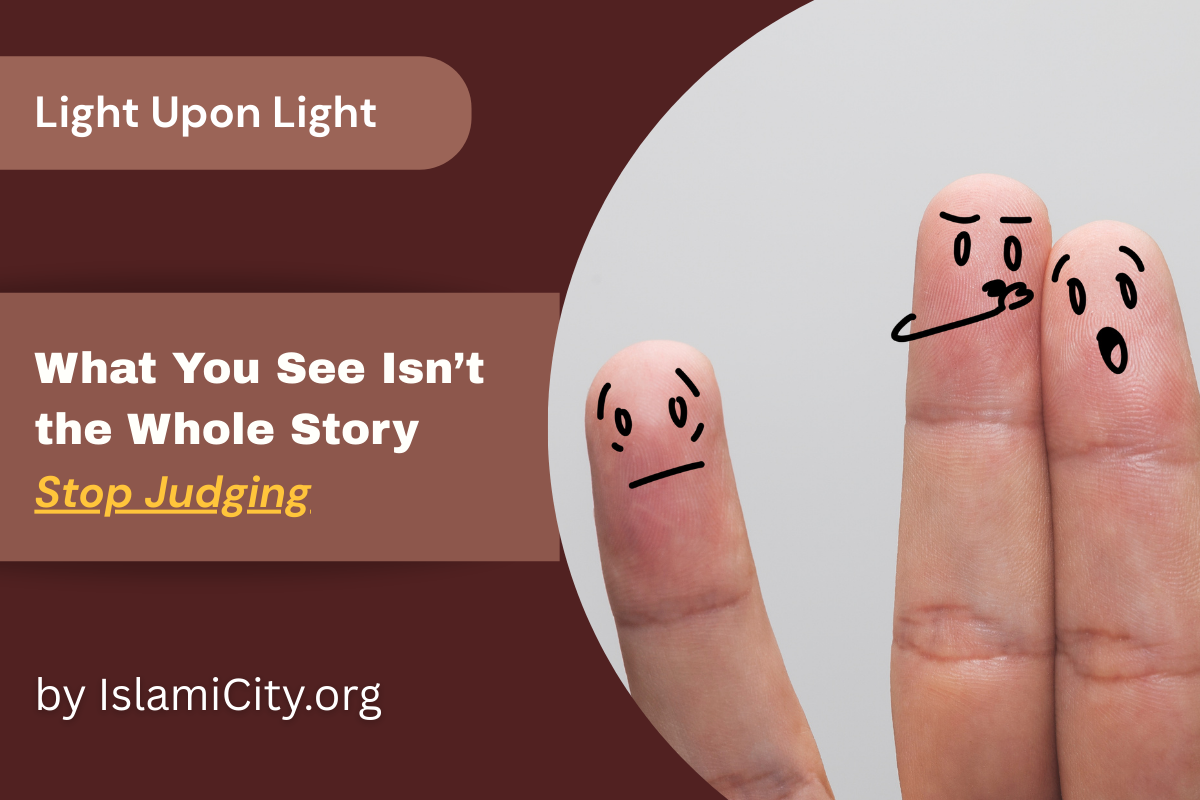 This One Choice Changes How You See People - Light Upon Light by IslamiCity...