
IslamiCity
Listen PodCasts, Live Quran, Watch Videos @VideoHub

In the current climate of political rhetoric against Islam and Muslims, it can be hard to remember that the United States has always been a country that has respected and acknowledged the contributions of people, places and ideas from outside its borders. While we often think of its inheritance from Greece or Rome, here is a quick tour of five surprising places where Islamic history, verses, or symbols have been represented and recognized by U.S. institutions.
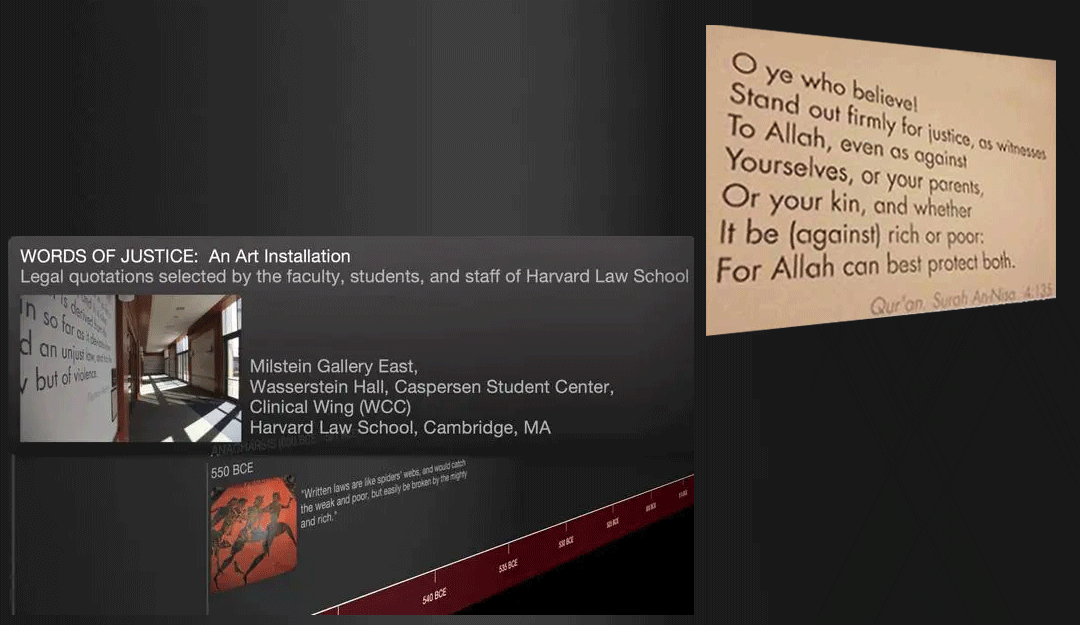
The tour starts just inside the entrance of the Faculty Library at Harvard Law School, where the Words of Justice exhibit presents 33 quotations representing history's greatest expressions of justice. Displayed prominently at the entrance wall are three quotations, the first by Augustine of Hippo, the second from the Magna Carta, and the third verse from the Holy Qur'an (Chapter 4, verse 135), which reads: "O ye who believe! Stand out firmly for justice, as witnesses to Allah, even as against yourselves, or your parents, or your kin, and whether it be against rich or poor: for Allah can best protect both." The passages of the exhibit were chosen by Harvard Law faculty and students for their "testimony to the endurance of humanity's yearning for fairness and dignity through law."
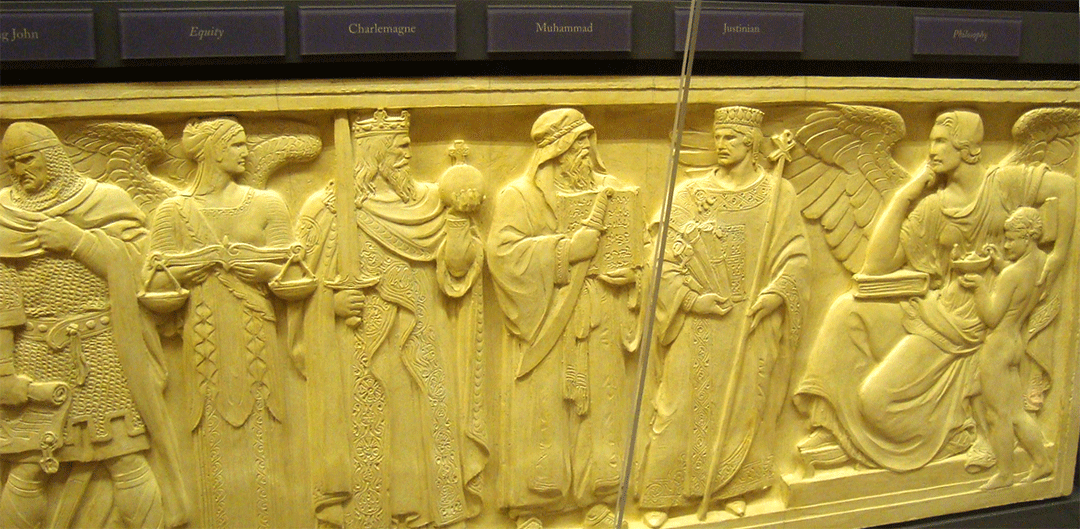
Move from the renowned school of law to the highest court. Carved in marble inside the Supreme Court building in Washington D.C., directly above the courtroom bench, on the North Wall frieze (PDF) showing eighteen of the greatest leaders in history who played a role in establishing laws. The line-up includes Justinian, Charlemagne, King John, and the Prophet Muhammad.
Although the frieze was carved in 1935, the inclusion caused a controversy in 1997. A Muslim group argued that the portrayal of the Prophet was forbidden and that the face of the sculpture should be sanded down. Chief Justice William Rehnquist responded that the sculpture was "intended only to recognize [Prophet Muhammad], among many other lawgivers, as an important figure in the history of law." In addition, an Islamic legal scholar, Taha Jaber al-Alwani of the Fiqh Council of North America, wrote an extensive fatwa arguing that the sculpture was intended as a positive gesture and as an honor bestowed by non-Muslims. The group that raised the concern stated that they felt the issue was closed and the matter was behind them. As one article noted, the incident helped point out that not all taboos are eternal.
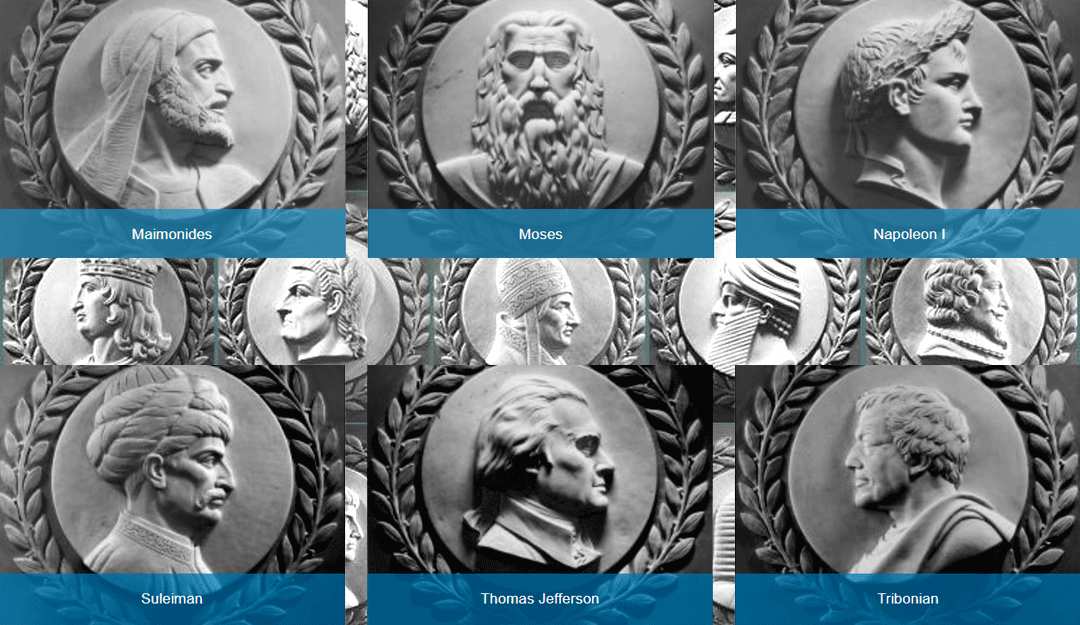
Walk across the street from the Supreme Court to the US Capitol building. Around the walls of the House of Representatives Chamber are twenty-three relief portrait plaques, depicting "historical figures noted for their work in establishing the principles that underlie American law." Installed in 1950, the portraits include Moses, Grotius, Napolean, Blackstone, and Jefferson. At the North-East corner, between Maimonides and Innocent III, is a portrait of Suleiman, the Sultan of the Ottoman Empire from 1520 to 1566. Best remembered today for the architecture he sponsored, including the Suleymaniye Mosque in Istanbul and the old city walls of Jerusalem, Suleiman was known during his lifetime as the qanuni, the one who gives "canon" or laws. Among some of his laws, according to historian Lord Kinross, he issued a ferman (edict) prohibiting blood libel against Jews, and developed a reform that reduced levies paid by Christian Rayas, "raising their status above serfdom to the extent that Christian serfs would migrate to Turkish territories to benefit."
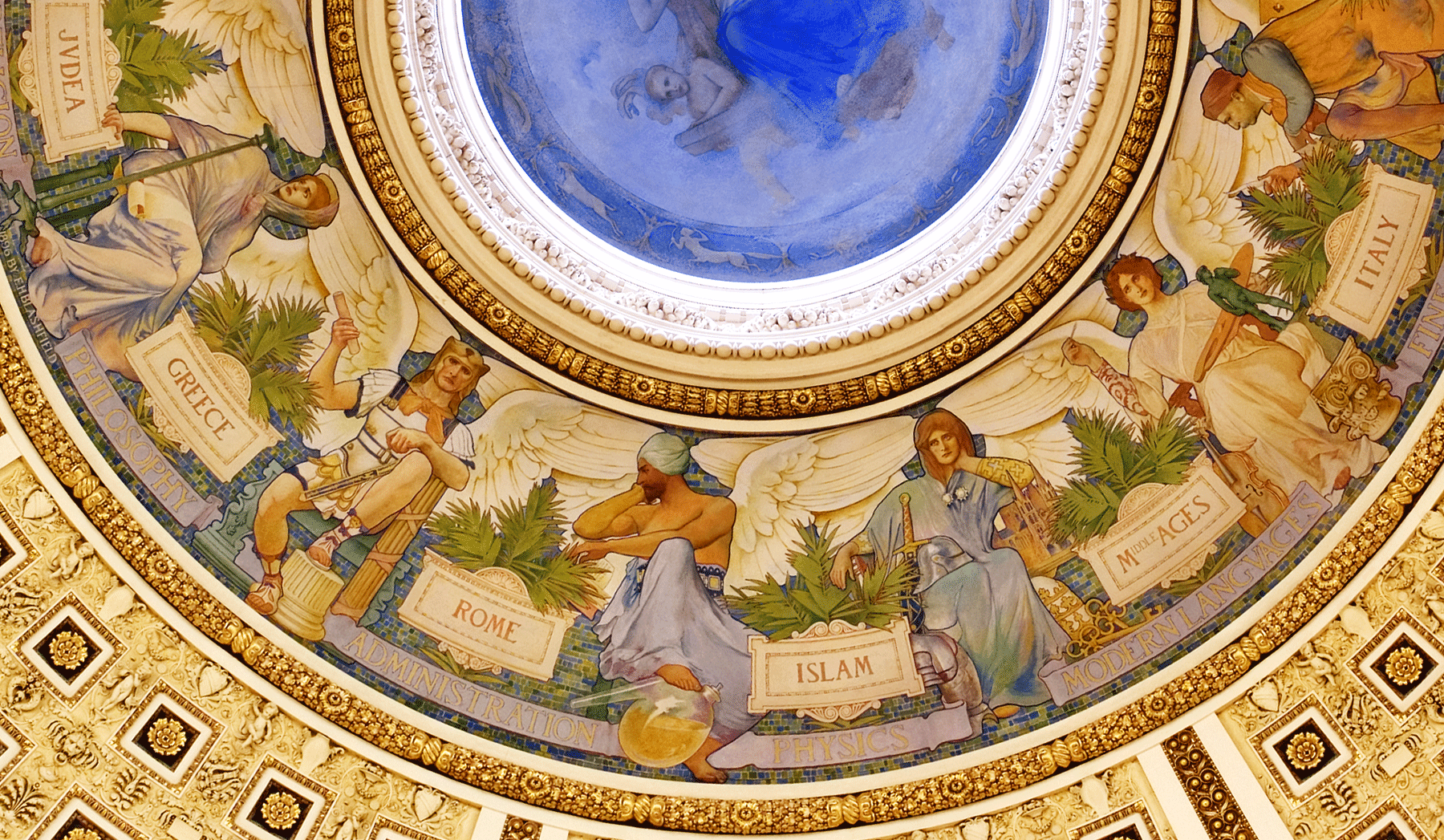
The impact of Islamic lands on the physical sciences is succinctly demonstrated by observing the number of scientific words that originated from or were transmitted through Arabic, many recognizable by the prefix "al", which means "the." The words include those used in mathematics (algebra, algorithm, average, zero, decipher, Arabic numerals), astronomy (nadir, zenith, almanac, and the majority of star names), and chemistry (alcohol, alkali, amalgam, benzene, elixir, and alchemy - the precursor word for chemistry).
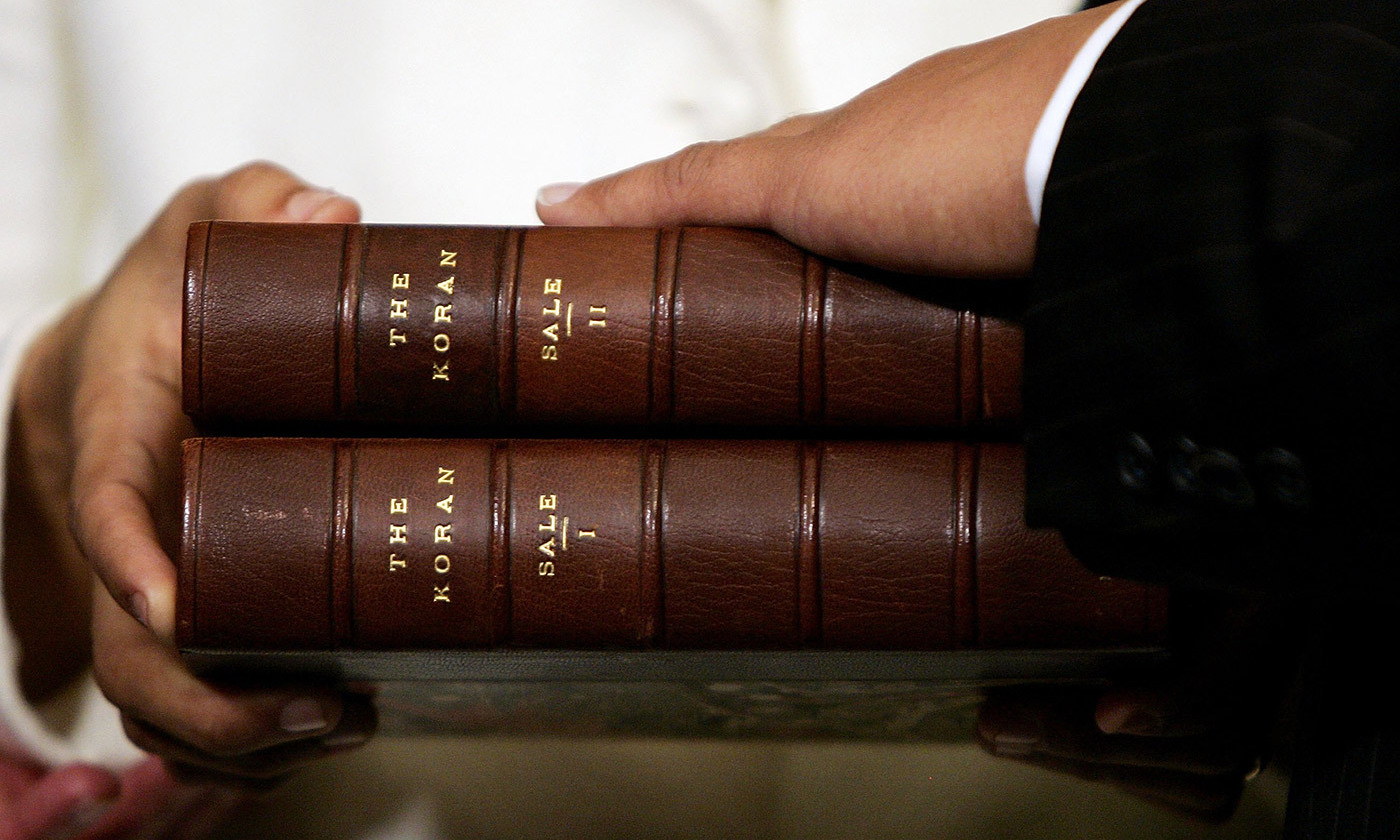
Ellison said that using Jefferson's Qur'an made an important point: "It demonstrates that from the very beginning of our country, we had people who were visionary, who were religiously tolerant, who believed that knowledge and wisdom could be gleaned from any number of sources, including the Qur'an. A visionary like Thomas Jefferson was not afraid of a different belief system. This just shows that religious tolerance is the bedrock of our country, and religious differences are nothing to be afraid of."
That, perhaps, is what this tour can teach us. More than anything about Islam, these symbols are about America. They are about openness to acknowledging America's debt to a shared human heritage, a concept that seems to have been all but forgotten in today's environment.
It is perhaps a lesson equally applicable now to both America and many Muslim-majority countries: it is only by recalling the best of our principles and traditions that we can defeat the worst of them.
Follow Furqan on Twitter @furqankshaikh. This article originally appeared on MuslimMatters.org
 Irfan Khan: A Photojournalist of Par Excellence


